
Today, I want to tell you about Warren Buffett’s “Golden Rule”, which is one of his greatest quotes of all time:
“Rule №1: Never lose money. Rule №2: Never forget rule №1.” — Warren Buffett
This is a quote with an exceptionally clear meaning that tends to be forgotten by many modern investors and entrepreneurs.
The meaning is simple: Be radically intentional about spending, preserve your capital, and play long games with your money.
I think about this quote almost daily as a frugal entrepreneur because it’s so powerful, yet so easy to understand and apply.
Here are 5 ways you can apply the Golden Rule as a frugal entrepreneur.
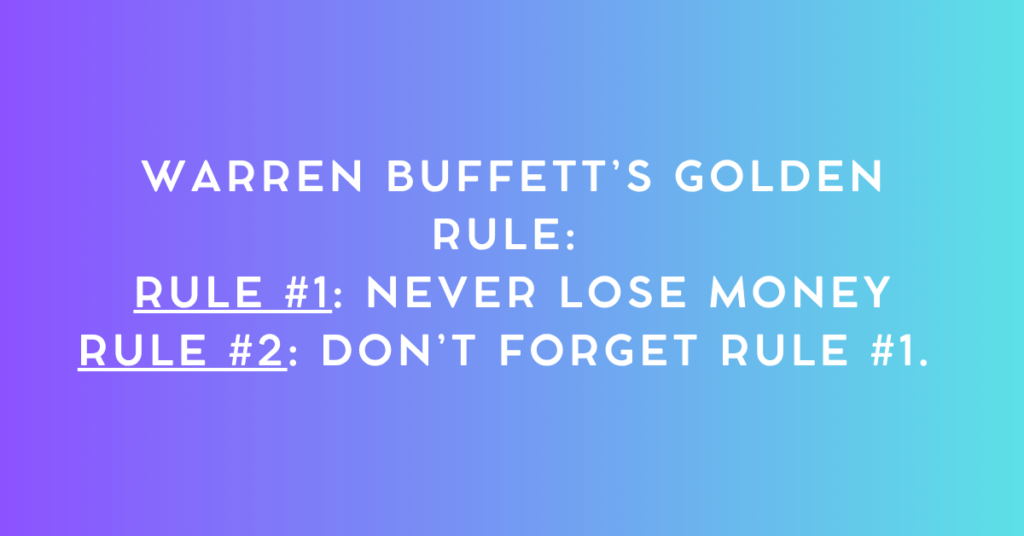
Table of Contents
1. Think Like an Investor, Not a Spender
Warren Buffett prefers to allocate capital instead of spending money.
Focused, frugal entrepreneurs do the same thing.
Instead of asking: “Can I afford this?”
Ask: “What will this return?”
Whether it’s software, advertising, or hiring help, every dollar needs to have a measurable purpose.
If it doesn’t move the needle in your business, it’s not an investment, it’s an expense, and that means you’re losing money.
Action step:
Before any purchase, write down the expected ROI (return on investment). If you can’t define one, skip it.
2. Avoid “Hidden Losses”
You often won’t even realize you’re losing money.
Here’s what we can call silent losses:
- Subscriptions you don’t use
- Ads that don’t convert
- Projects that eat time but never ship
- Clients that drain energy but don’t pay well
These are examples of slow leaks that sink businesses.
Action step:
Audit your expenses and your time every quarter.
Ask: “What’s actually giving me an advantage, and a ROI?” Then cut the rest with ruthless intent.
3. Build a Margin of Safety
Warren Buffett loves the concept of a “margin of safety”, which is a cushion between you and disaster in your business or investments.
For entrepreneurs, this means:
- Keep cash reserves (3–6 months of expenses)
- Don’t go all-in on one client or product
- Test small and validate before scaling big
Remember, being frugal doesn’t mean you’re being cheap. It means you’re staying in the game long enough to win, and being radically intentional with your spending.
Action step:
If a big opportunity could wipe you out if it fails, scale it down and test/ validate it first. Validation ensures your idea will work, and iteration allows you to execute consistently and adapt over time.
4. Value Preservation > Flashy Growth
Warren Buffett doesn’t chase hyped up meme stocks or trendy investments. Instead, he plays the long game and focuses on his strategy that’s always worked for him.
Frugal entrepreneurs can learn from that. Don’t focus on growing fast; focus on growing sustainably.
Which makes me think of the quote I learned from Tim Ferriss: “Slow is smooth, and smooth is fast.”
At the end of the day, it’s better to have slow, consistent cash flow than rapid growth that crashes and burns.
Action step:
Focus on repeat customers, subscriptions, long-term relationships, and assets that protect your income when things get rough.
5. Remember: Every Dollar You Don’t Lose Is a Dollar You Don’t Have to Earn
This is something that most entrepreneurs know but rarely talk about or apply: Avoiding losses has the same impact on your bottom line as making more money.
If you save $1,000/month in unnecessary costs, that’s like adding $12,000/year to your profits without working harder.
Some people call this “reverse passive income”, which has become one of my favorite financial terms.
Final Thoughts about Warren Buffett’s Golden Rule
Now you know how to apply Warren Buffett’s two rules, which form the “Golden Rule”.
Warren Buffett’s quote is about disciplined, intentional investing. And as entrepreneurs, we can apply it by staying frugal, lean, and focused.
Frugal entrepreneurs who live by Rule №1 and Rule №2 thrive in business.
So the next time you’re about to spend, invest, or expand, ask yourself:
“Will this help me keep Rule №1?”
Because, as Warren Buffett will remind you:
“Rule №1: Never lose money. Rule №2: Never forget rule №1.”